
What does a B2B ecommerce agency do differently than a B2C agency?
A B2B ecommerce agency builds for buying committees, negotiated pricing, quote and requisition workflows, account permissions, net payment terms, bulk reordering, and procurement-system integrations. A B2C agency typically optimizes for one shopper making one purchase in a single session.
A B2B ecommerce agency and a B2C ecommerce agency both build online stores, but the businesses buying from them behave nothing alike. The global B2B ecommerce market is on track to hit $36 trillion in 2026, growing roughly 14.5% a year, and most of that volume runs through buyers who never want to talk to a salesperson at all. That single fact changes almost everything about how the site gets built, priced, and measured.
The Buyer Is Different, So the Site Has To Be
Gartner's 2024 research found B2B buyers spend only 17% of their total purchase time in direct contact with a vendor, which puts roughly 80% of the buying journey in the buyer's own hands: researching specs, comparing vendors, and building internal consensus before anyone from sales gets a call. Separate research backs this up from the other direction: 61% of B2B buyers say they prefer a rep-free buying experience, and effectively all B2B buyers want to self-serve at least part of the purchase.
A B2C agency optimizes a homepage and product page to convert an individual shopper in one session. A B2B ecommerce agency has to build for a buying committee that might include a procurement manager, a department head, and a finance approver, none of whom arrive at the site the same day. That means detailed spec sheets and certifications instead of lifestyle photography, saved carts and shareable quotes instead of one-click checkout, and account permissions that let one buyer requisition and another approve.
Order Sizes Change the Entire Build
B2B average order values typically run 5 to 10 times higher than B2C, and in categories like industrial equipment a single order can range from $15,000 to $250,000. Nobody enters a five-figure order with a credit card and a two-minute checkout. A B2B ecommerce agency has to build for net payment terms, purchase orders, credit checks, and pricing that changes by customer tier or contract, not a single sticker price shown to everyone.
What "B2B Ecommerce Features" Actually Means in Practice
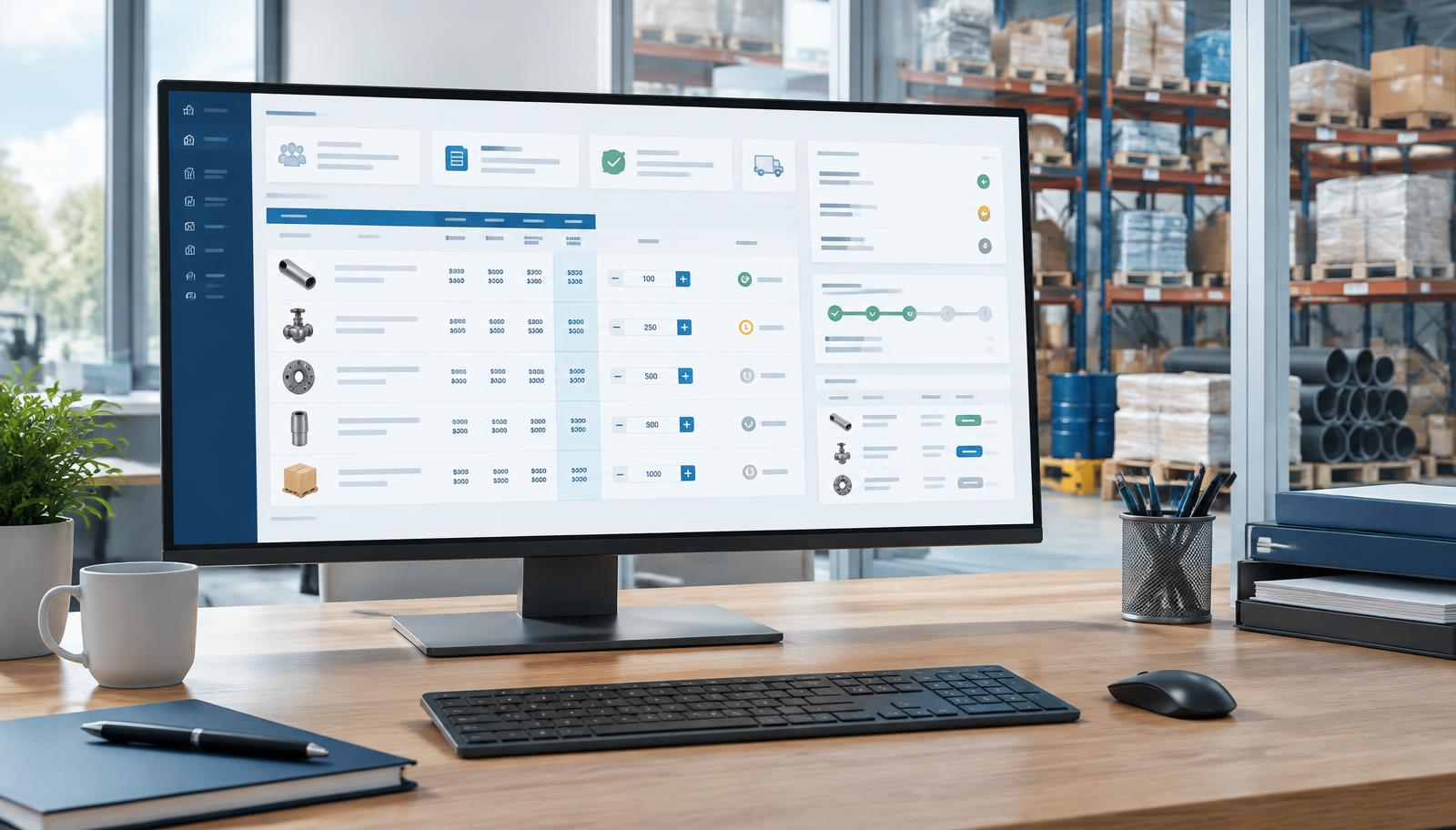
This is where a B2C-trained developer usually gets it wrong. The features that actually matter for a B2B build include tiered pricing by customer group, quote-request workflows instead of fixed add-to-cart pricing, net-30 or net-60 checkout options, multi-user account roles with approval limits, bulk reorder tools, and punchout or EDI integration so a buyer's own procurement system can place the order directly. None of these show up on a typical B2C features list, and skipping them is the fastest way a B2B site fails to convert even when traffic looks healthy.
Retention Beats Acquisition in B2B
B2B companies report an 82% 12-month customer retention rate, compared to 74% for B2C. That gap is why a competent ecommerce consulting partner spends as much effort on reorder friction as on the first sale: saved order templates, auto-replenishment schedules, and account-level reporting matter more here than a slick landing page, because the goal is a customer who reorders for years, not a shopper who converts once.
Where a B2C Playbook Actively Hurts a B2B Site
Countdown timers, flash-sale banners, and review carousels are staples of B2C conversion optimization, and they tend to backfire on a procurement buyer trying to build a defensible case for their manager. A B2B site earns trust with technical documentation, case studies with named clients, and clear compliance or certification information, not urgency tactics. Search behavior differs too. A B2C shopper searches broad, commercial terms; a B2B buyer searches specific product specs, integration questions, and vendor comparison terms tied to their exact use case, so the content strategy has to follow buyer intent that looks almost nothing like a consumer search pattern.
What This Means When You're Choosing an Agency
The clearest signal that an ecommerce agency actually understands B2B, rather than applying a B2C template to a B2B brand, is whether it can show you quote or requisition workflows it has built, ERP or punchout integrations it has shipped, and case studies measured by reorder rate and account growth rather than one-time conversion rate. The same logic applies to platform work: a team that has only ever configured Shopify for B2C storefronts will need to prove it can also configure B2B catalogs, customer-specific pricing, and wholesale channels correctly, not just claim it can.
Seal Global's own ecommerce team runs separate B2B and B2C playbooks under one roof for its clients, swapping in tiered quote workflows and account permissions for a B2B brand the same week it's running cart-abandonment flows for a B2C brand on the next account over.
Related Reading
- What Does an Ecommerce Agency Do?
- What Ecommerce Consultants Actually Do
- Shopify Agency vs. In-House Developer: The Real Tradeoffs
- How Outsourced Ecommerce Customer Support Actually Works
Sources: Experro, “Latest B2B eCommerce Statistics & Market Size (2026 Edition)”; Brixon Group, citing Gartner 2024 B2B buying journey research; and Ringly, “55 B2B ecommerce statistics you need to know in 2026”.
Related services from Seal Global
B2B Ecommerce Agency
B2B storefronts, account workflows, wholesale catalogs, and platform operations.
Learn moreEcommerce Consulting Services
Platform, process, and operating-model guidance for growing ecommerce businesses.
Learn moreShopify Development Services
Shopify storefront, catalog, integration, and customization work.
Learn moreFrequently asked questions
11 answers about b2b ecommerce.
1. B2B Ecommerce Basics
2. How B2B Buyers Actually Shop
3. Choosing and Working With an Agency
Build around how B2B buyers actually purchase
Review the account, pricing, quote, and integration workflows your B2B storefront needs.
Talk to our ecommerce team