
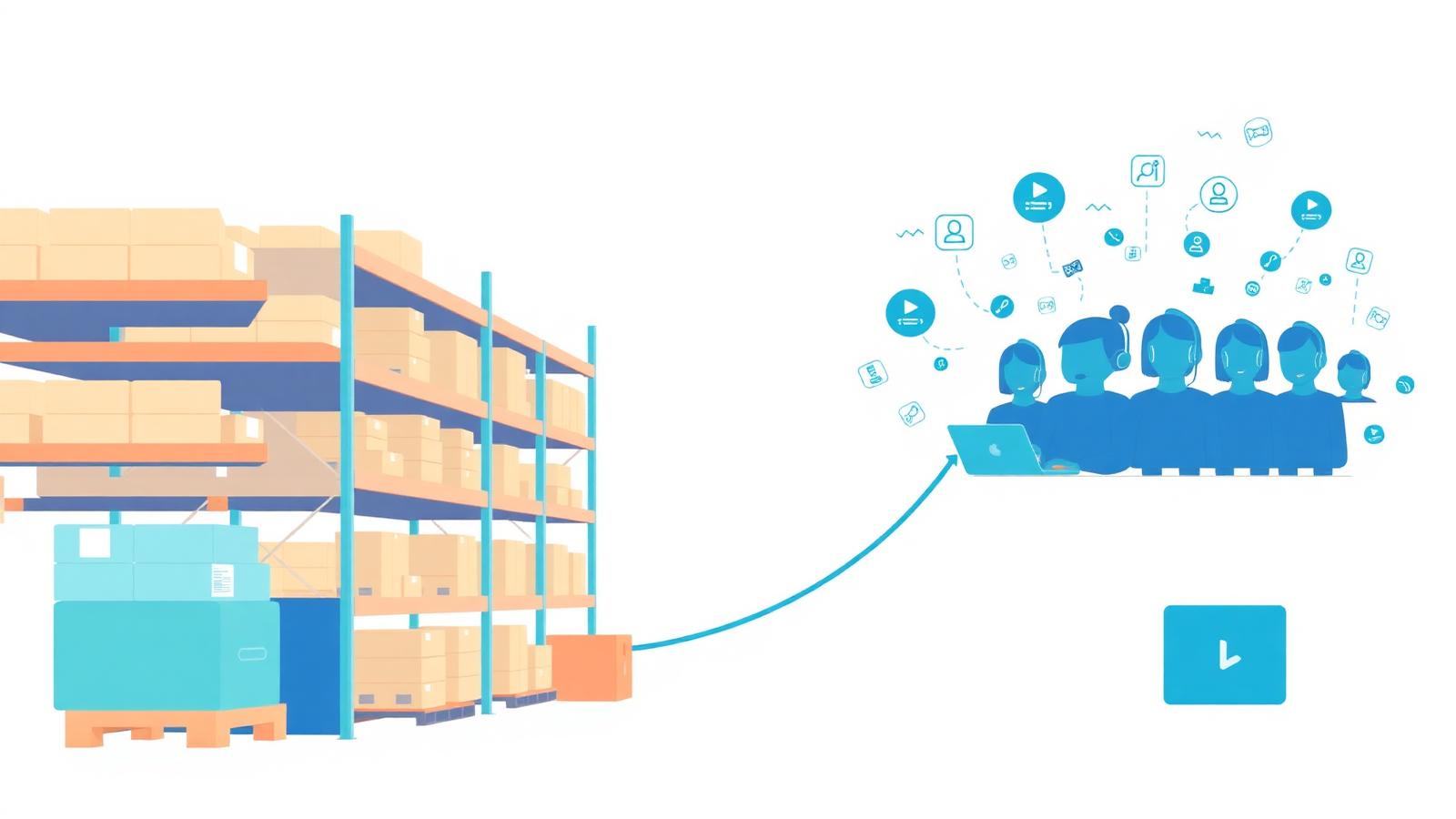
Should a DTC brand outsource ecommerce operations?
For most DTC brands under roughly $10M in revenue, yes. Outsourcing recurring ecommerce operations — customer support, order and returns processing, listings and inventory updates — typically delivers 40–60% cost savings versus domestic hiring, with trained coverage live in two to four weeks. Keep merchandising, brand and supplier negotiation in-house; outsource the documented, repeatable execution.
By Trisha Seal · July 30, 2026 · Seal Global has run ecommerce operations pods for DTC and marketplace brands for 25+ years, with AI-augmented workflows that typically deliver 40–60% savings against domestic hiring.
The brand in this story sells a mid-priced consumables line, mostly on Shopify, with a growing Amazon channel. Names and a few identifying details are changed; the numbers and the sequence are not. They came to us because they wanted to outsource ecommerce operations after a peak season that nearly broke the team.
Month zero: the symptoms
Nothing was catastrophically wrong, which is why it had gone on so long. Support first-response time had drifted from four hours to nineteen. Two founders were personally clearing the returns queue on Sundays. A catalog of 1,400 SKUs had roughly 200 listings with stale copy or missing attributes. And the last two hires had each taken eleven weeks from job post to productive.
first-response time before the transition
SKUs, ~200 with stale or incomplete listings
average time-to-productive on domestic hires
operations cost reduction at steady state
The decision: what to keep, what to hand over
The useful question is never "should we outsource?" It is "which hours are proprietary?" Merchandising calls, brand voice and supplier negotiation stayed in-house. Everything documented and repeatable moved: tier-one and tier-two support, order and returns processing, listing creation and maintenance, inventory sync verification, and daily reporting. That split is the same one we recommend inside our customer support outsourcing engagements.
The 90-day transition, step by step
- Days 1–10 — Audit and SOP capture. We shadowed the existing team, recorded every recurring task, and wrote 34 SOPs. Most brands discover here that half their process lives in one person's head.
- Days 11–20 — Pod design and staffing. Three named agents plus a team lead, matched to timezone coverage across US business hours and an overnight shift for Amazon and international orders.
- Days 21–40 — Supervised pilot. The pod handled 30% of ticket volume with 100% QA review, scored against a written rubric. Macros and AI-assisted triage were tuned during this window.
- Days 41–60 — Ramp to full volume. QA sampling dropped to 20%. Listings work began in parallel at 60 SKUs per week.
- Days 61–90 — Steady state and automation. Order-exception routing automated, reporting scheduled, weekly business review installed with the founders.
What the numbers looked like
| Metric | Before | Day 90 |
|---|---|---|
| First response time | 19 hours | Under 2 hours |
| Tickets resolved per day | ~85 | ~240 |
| Stale / incomplete listings | ~200 | 0 |
| Sunday founder hours on ops | 6–8 | 0 |
| Monthly operations cost | Baseline | −52% |
| Peak-season scaling time | 11 weeks (hiring) | 5 days (added seats) |
The fulfillment question they got right
They almost bought the wrong thing. Ecommerce fulfillment services in the physical sense — warehousing and pick-pack — were already handled competently by their 3PL. What was failing was fulfillment operations: exception handling, carrier claims, split-shipment communication, and supplier follow-up. That is a process problem, not a warehouse problem, and it is where most of the customer complaints and margin leakage actually originated. Distinguishing the two saved them a pointless 3PL migration.
What we would tell the next brand
- Document before you delegate. Undocumented processes get outsourced badly and blamed on the vendor.
- Start with three functions, not ten. Support, orders and listings cover most of the hours.
- Refuse minimum seat counts. Start at two or three seats and scale on evidence.
- Insist on named agents and written SLAs — not a shared pool.
- Agree peak-season scaling terms in July, not in November.
If the same symptoms sound familiar, our ecommerce outsourcing services team will build the cost model first and the proposal second — and if the math does not work, we will say so. For brands whose bottleneck is the storefront rather than the back office, our Shopify development services and ecommerce agency teams handle that side.
Related services from Seal Global
eCommerce Outsourcing Services
Dedicated pods for support, orders, listings and inventory.
Learn moreGet an ecommerce operations cost model
A written seat-by-seat comparison against your current spend.
Learn moreShopify Development Services
Theme, app and automation work on your Shopify stack.
Learn moreEcommerce Agency
Full-service growth, merchandising and marketing.
Learn moreCustomer Support Outsourcing
Named agents, written SLAs, 24/7 coverage.
Learn moreEcommerce Customer Support
Gorgias, Zendesk and Shopify Inbox specialists.
Learn moreFrequently asked questions
15 answers about dtc outsourcing case study.
1. Choosing a Provider
2. Cost & Comparisons
3. Fulfillment, Shipping & Inventory
4. Platform & Service Scope
Model the numbers before you hire again
We will build a written, seat-by-seat cost comparison against your current operations spend — no obligation, no minimum seat count.
Get my free cost model