
Case Study · Search Strategy · 2026

What Happened When We Moved Our Own Search Optimization Consultants Page

By Trisha Seal · 12 min read

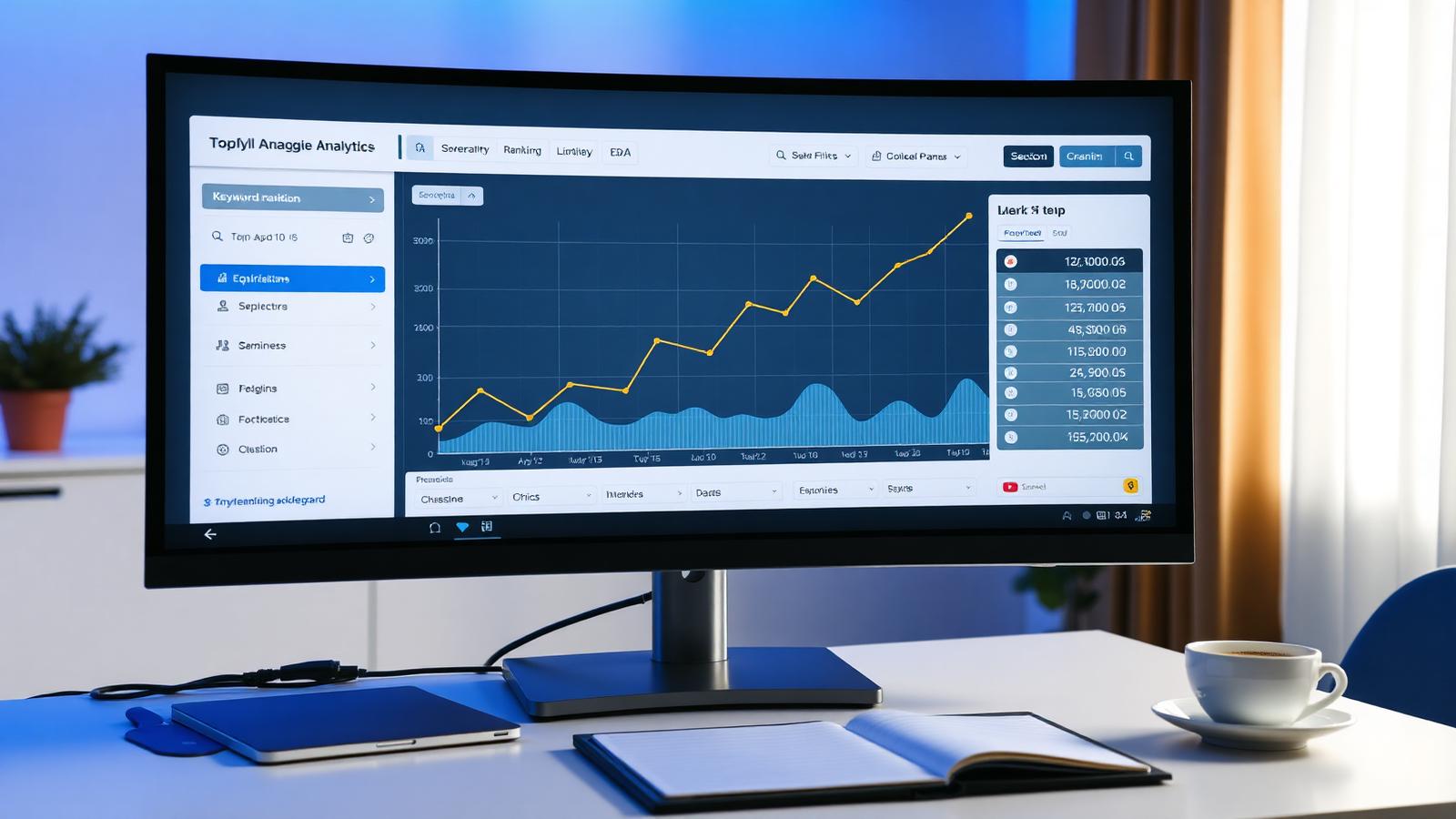
Analytics dashboard showing a keyword ranking line climbing from off-chart into the top ten positions

What happens to rankings when you move a ranking page to a new URL?

When a ranking page is consolidated onto a new URL, expect a temporary softening even with correct 301 redirects. Our own page for 'search optimization consultants' went from not ranking in the top 100 on 29 July 2026 to position 4 by 5 August on an interim blog URL, then settled at position 9 by 12 August after consolidating onto the dedicated /search-optimization-consultants service page. The redirect preserved most equity; the loss came from internal links and topical context that had to be rebuilt around the new URL.

By the Seal Global Content & Search Strategy Team · August 14, 2026 · Written from our own tracked ranking data. Seal Global's search optimization consultants run this exact diagnostic process for client sites every week — this time we ran it on ourselves, and published the unflattering part too.

Most case studies about search optimization consultants are written after the graph goes up and stop there. This one covers the whole arc, including the part where our own ranking dropped five positions because of a decision we made on purpose. In two weeks we went from nowhere to page one on a 9,900-a-month keyword with a $56 cost-per-click, then gave some of it back when we consolidated the URL. Here is the timeline, the reasoning, and what we would do differently.

9,900/mo

Search volume for the target keyword, KD 38, CPC $56.06

4

Peak tracked position, reached 5 August on the interim URL

9

Current tracked position after URL consolidation, 12 August

The starting point: invisible on our own category term

On 29 July 2026 we took a baseline. For the phrase that describes what we actually sell, we were not in the top 100. Not position 47, not position 88 — absent. We had written around the topic for months in blog form, but there was no single page a search engine could confidently treat as “this is the page about this service.” The topic was spread thinly across a dozen posts, each partially answering the query and none of them owning it.

That is the most common structural problem we find on client sites too, and it is why the first thing our consultants look for is not a missing keyword but a missing owner page.

Week one: building the page and watching it move

On 30 July we published a dedicated service page. It was not clever. It answered the query directly in the first paragraph, laid out scope, pricing bands, process and proof, carried Service and FAQPage schema, and linked out to the adjacent services a buyer would ask about next — including AI search optimization, because roughly a third of the questions we get during a sales call are now about ChatGPT visibility rather than Google.

Because of a routing decision made in a hurry, the page went live on an interim URL under the blog path rather than at the top level. By 5 August, tracked position was 4. Six days, unranked to page one. That is not typical, and we want to be honest about why it happened: an established domain, an unusually tight cluster of existing supporting content, and a keyword whose difficulty score of 38 overstates how well-defended the actual results page is.

The decision to consolidate — and what it cost

A money page living on a blog URL is a strategic error even when it ranks. It signals the wrong content type, it inherits blog-level internal linking, and it makes future architecture messy. So on the strength of a page-one ranking, we moved it to the top-level /search-optimization-consultants URL and 301 redirected the old path.

By the 12 August tracked read, position was 9. Still page one, but five positions softer. The redirect passed the link equity as expected. What did not transfer instantly was context: dozens of internal links across older posts still pointed at the old path and were being followed through a redirect hop, and the new URL had no accumulated engagement history of its own.

What we would do differently

  1. Publish the money page at its permanent URL from day one, even if the content is thinner at launch.
  2. Update internal links to the destination URL in the same deploy as the redirect, not a week later.
  3. Resubmit the sitemap and request indexing on the new URL the same day, not on the next batch cycle.
  4. Expect a two to six week re-stabilisation window and do not panic-edit the page during it.

The five-step process we used, in order

  1. Baseline honestly. Record actual tracked positions before touching anything, including the embarrassing ones.
  2. Find the missing owner page. Identify the query with no single page assigned to it.
  3. Build for the query, not the keyword. Direct answer first, then scope, pricing, process, proof, schema.
  4. Consolidate deliberately. One canonical destination, redirects in place, internal links rewritten in the same release.
  5. Measure on a fixed cadence. Weekly tracked reads on commercial terms, monthly review of AI citations.

Timeline at a glance

DateEventTracked position
29 Jul 2026Baseline read — no dedicated page existsNot in top 100
30 Jul 2026Dedicated page published on interim blog URL
5 Aug 2026First page-one read4
~9 Aug 2026Consolidated to top-level URL with 301
12 Aug 2026Post-consolidation read9
19 Aug 2026Next scheduled tracked readPending

Why this matters if you are hiring

The reason we published the drop as well as the climb is that it is diagnostic. A consultant who only ever shows you the up-and-to-the-right slide has either never made a structural change or is editing the story. Ranking work involves deliberate trade-offs, and the ones worth making sometimes cost you positions in the short term to buy a defensible architecture.

The same principle applies to AI search. We track how our brand is described inside ChatGPT and Google AI Overviews alongside classic rankings, because a page-one listing that never gets cited in an AI answer is only half a result — which is precisely why our generative engine optimization work runs on the same reporting cadence as the ranking work, and why local SEO services feed the same entity data when a business is location-dependent.

Related reading

Frequently asked questions

18 answers about search optimization consultants.

1. Understanding the Role

2. Cost & ROI

3. Hiring & Vetting

4. Working With a Consultant

5. Results & Timeline

Want the same diagnosis on your site?

A free visibility audit covering technical health, page consolidation risk and AI search citation.

Request my free audit

Understanding the Role

What does a search optimization consultant actually do?

A search optimization consultant diagnoses why a site is not earning the visibility its offer deserves, then prioritises the fixes that move revenue rather than vanity metrics. In practice that means technical crawl and indexation work, information architecture and internal linking, page-level content and entity coverage, and now AI-search citation work. A consultant is accountable for judgement calls — which pages to consolidate, which to kill, which keyword to defend — not just for producing deliverables.

How is a search optimization consultant different from an SEO agency?

An agency sells a packaged process delivered largely by junior staff with an account manager between you and the work. A consultant sells senior judgement applied directly to your site, usually with a smaller scope and a shorter chain of command. Seal Global runs a hybrid: a senior consultant owns strategy and reporting, and a delivery pod handles the production volume, so you get the judgement without paying senior rates for content production.

Do I need a search optimization consultant or an in-house hire?

If you publish continuously, own multiple properties and can keep a specialist busy 40 hours a week, in-house is usually cheaper per hour. If your need is diagnostic and cyclical — a migration, a ranking loss, a new money page — a consultant costs far less than a $95k-plus salary and brings pattern recognition from dozens of sites. Many companies use both: an in-house marketer executing, a consultant setting direction.

What industries benefit most from hiring a search optimization consultant?

High-consideration, high-ticket categories where a single conversion is worth hundreds or thousands of dollars: legal, dental and elective medical, B2B services, SaaS, ecommerce with deep catalogues, and professional services. The common factor is not industry but margin per lead. When one extra qualified enquiry a week covers the retainer, consulting economics work almost immediately.

Cost & ROI

How much does a search optimization consultant cost?

Realistic 2026 US ranges are $150-$400 an hour for project work, $1,500-$5,000 a month for an ongoing retainer with a small delivery team, and $5,000-$15,000 for a one-off strategic audit of a large site. Anything under about $750 a month is typically a reporting subscription rather than consulting. Seal Global's consulting engagements start at $1,500 a month with no long-term contract.

What is a realistic ROI timeline when hiring a search optimization consultant?

Technical and on-page fixes often show movement in 3-6 weeks. Ranking gains on competitive commercial terms usually take 3-6 months, and compounding revenue impact 6-12 months. Our own money page went from unranked to position 4 within a fortnight, but that is a domain with existing authority and an unusually tight topical cluster — treat it as the ceiling, not the expectation.

Are search optimization consultants worth it for small businesses?

Yes, when the engagement is scoped to a few decisive fixes rather than a permanent retainer. A small business usually has three or four structural problems — thin service pages, no internal linking, an unclaimed or unoptimised local profile, no schema — and fixing those once is worth more than a year of low-budget monthly content. Buy the diagnosis first, then decide about ongoing work.

What's included in a typical search optimization consultant's monthly retainer?

A credible retainer includes a prioritised roadmap, technical monitoring and fixes, on-page work on a defined set of pages, content briefs or production, internal linking and schema maintenance, digital PR or link acquisition where relevant, AI-search visibility tracking, and a monthly review with a human. If a proposal cannot tell you how many hours of senior time you are buying, that is a warning sign.

Hiring & Vetting

What questions should I ask before hiring a search optimization consultant?

Ask who does the actual work and what percentage is senior time. Ask for two examples where they lost rankings and what they did. Ask what they would deprioritise on your site. Ask how they will measure success in month one versus month six. Ask how they treat AI search visibility. Vague answers to the second question are the strongest single predictor of a bad engagement.

What are the warning signs of a bad search optimization consultant?

Guaranteed rankings, undisclosed link networks, a report that only shows impressions and 'keywords in top 100', an unwillingness to name the pages they will change, monthly deliverable counts instead of outcomes, and long lock-in contracts with no exit clause. Add one modern flag: a consultant who has no view on how your brand is described inside ChatGPT and Google AI Overviews is working from a 2019 playbook.

Should I hire a freelance search optimization consultant or an agency team?

A freelancer is right for diagnosis, strategy and a modest execution load, and is usually cheaper. A team is right when execution volume is the bottleneck — hundreds of pages, multiple locations, continuous publishing. The failure mode with freelancers is capacity; the failure mode with agencies is dilution. A blended model, senior owner plus delivery pod, avoids both.

What certifications or experience should a search optimization consultant have?

Certifications matter far less than a documented track record. Look for demonstrable work on sites in your structural situation — similar size, similar competition, similar CMS — plus fluency in server logs, structured data, analytics attribution and now LLM citation behaviour. Google Analytics and Google Ads certifications are table stakes, not evidence. Case detail beats credential lists every time.

Working With a Consultant

How often should I expect reporting from a search optimization consultant?

Monthly written reporting with a live call is the standard, supported by a dashboard you can open any day. The report should lead with revenue-relevant outcomes — qualified enquiries, rankings on your tracked commercial terms, indexed page health — and then explain what was done and what happens next. Weekly reporting on a channel that moves monthly usually creates noise, not accountability.

What access do I need to give a search optimization consultant?

Google Search Console, Google Analytics, your CMS with edit rights on the pages in scope, DNS or hosting for technical fixes, your Google Business Profile if local matters, and read access to whatever CRM captures leads. Grant access by named user, never by shared password, and revoke on exit. A consultant who works without Search Console access is guessing.

Can a search optimization consultant also help with AI search visibility (ChatGPT, Google AI Overviews)?

They should. Roughly the same fundamentals — entity clarity, structured data, extractable answers, third-party corroboration — drive both classic rankings and AI citation, but the tactics diverge in content structure and off-site mentions. Seal Global tracks brand prompts inside ChatGPT, Perplexity and Google AI Overviews alongside rank tracking, because a page-one listing that never appears in an AI answer is only half the job.

Results & Timeline

How long does it take to see ranking results after hiring a search optimization consultant?

On an established domain with existing authority, a well-targeted new page can enter the top 20 within two to four weeks and stabilise over two to three months. On a new or previously penalised domain, six to nine months is realistic. The single biggest variable is not effort, it is existing domain authority and how crowded the SERP is.

What common mistakes cause businesses to fall from page-1 rankings?

URL changes without redirects, consolidating two ranking pages into one without preserving internal links, cannibalising a money page with a near-duplicate blog post, deleting content that carried links, slow page performance after a redesign, and letting a page go stale while competitors update. We experienced the consolidation version of this ourselves and describe it plainly in this post.

How do I know if my search optimization consultant is actually working?

Three checks. First, are the tracked commercial keywords moving, not just total impressions? Second, has anything on your site actually changed this month — can they name the URLs? Third, are qualified enquiries up over a rolling 90 days? If a consultant cannot answer all three with specifics, the engagement is producing reports rather than results.