
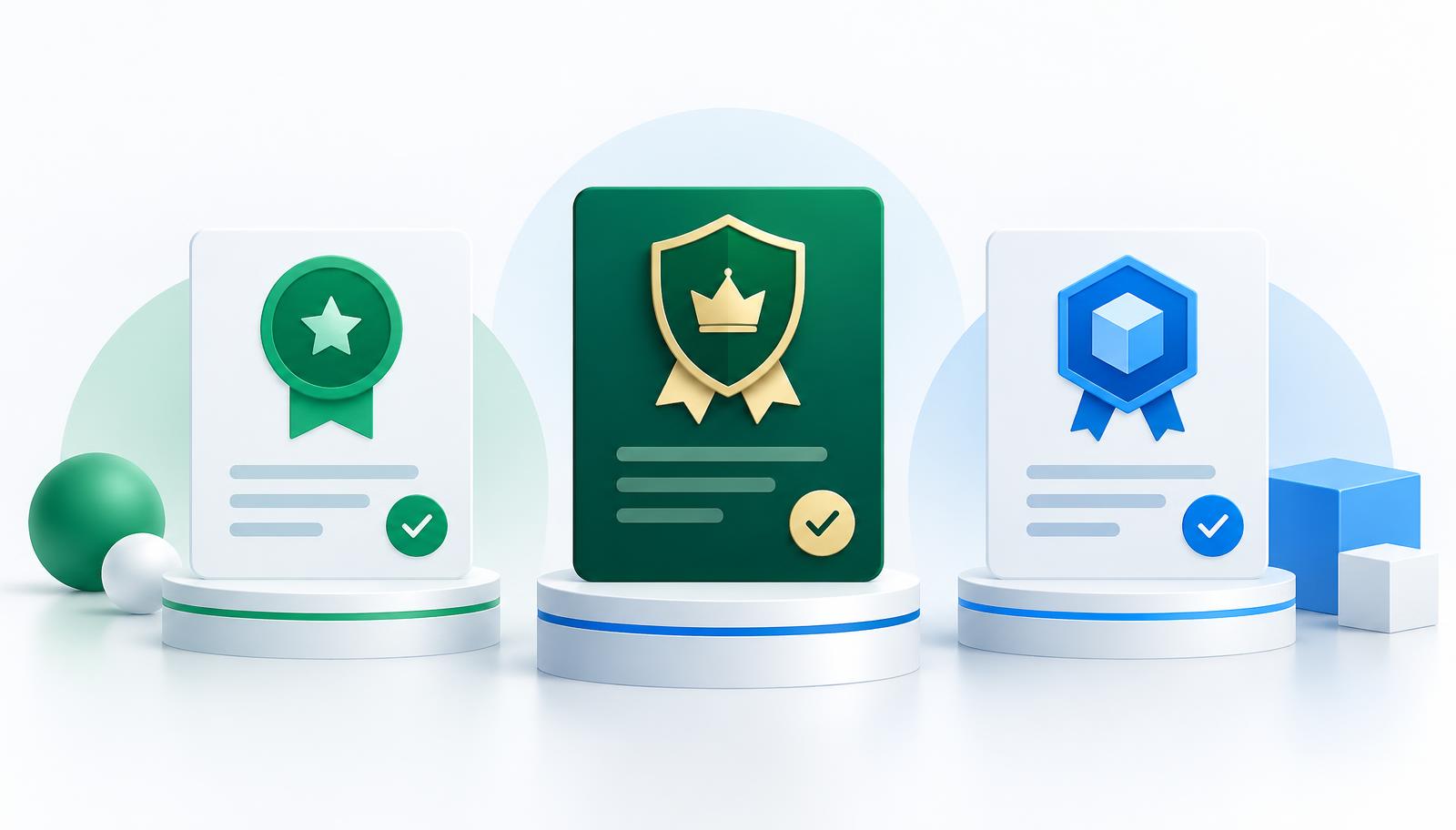
What's the difference between a Shopify Partner, a Shopify Plus Partner, and Built for Shopify?
A Shopify Partner account is free and open to anyone, with no revenue or experience requirement. A Shopify Plus Partner has cleared a specific enterprise bar: $500,000 in new referral revenue or $2.5 million in existing merchant revenue, plus at least two active Plus or Enterprise merchants. Built for Shopify is unrelated to agencies entirely; it certifies individual apps in the Shopify App Store for performance, design, and integration standards, reviewed annually.
A merchant researching who should build their Shopify store runs into three different badges within the first few search results: "Shopify Partner," "Shopify Plus Partner," and "Built for Shopify." All three carry Shopify's own branding, all three sound like some kind of vetting, and almost nobody explains that they verify three completely different things. One is free and open to anyone. One has a real revenue bar behind it. One doesn't apply to agencies at all. Here is what each badge actually confirms, and how to use that difference when hiring a Shopify development partner or agency.
A Shopify Partner account is free, and that's the point to understand first
Anyone can become a Shopify Partner. Registration is free, takes minutes, and comes with no revenue minimum or experience requirement. It grants unlimited development stores, partner-exclusive APIs, and access to Shopify Academy training. That access is genuinely useful for a developer or agency doing legitimate work, but it means the word "Partner" by itself tells a merchant almost nothing about who they are hiring. A one-person freelancer who signed up last week and a 40-person agency that has launched hundreds of stores both hold the identical "Shopify Partner" label.
The program actually has five tiers, and the tier is what separates them
Shopify's Partner Program ranks partners into five tiers based on revenue and merchant count, updated as of Q2 2026: Registered, Select, Plus, Premier, and Platinum. Registered is the free entry point described above. Select requires at least $100,000 in new referral revenue or $500,000 in existing merchant revenue. Plus requires $500,000 in new revenue or $2.5 million in existing revenue. Premier requires $2 million in new revenue or $10 million in existing revenue. Platinum, the top tier, requires $5 million in new revenue or $25 million in existing revenue. Higher tiers unlock a visible tier badge, priority placement in Shopify's own Partner Directory, dedicated partner support, and access to Market Development Funds that lower tiers don't receive. This is the actual signal worth checking, not the bare word "Partner."
Shopify Plus Partner status is a specific enterprise bar, not a marketing phrase
"Shopify Plus Partner" gets used loosely in agency marketing, but it maps to a defined qualification: $500,000 in new referral revenue or $2.5 million in existing managed merchant revenue, combined with actively managing at least two Plus or Enterprise merchant accounts. That bar exists because Plus-tier stores involve custom API work, headless commerce builds on Hydrogen, and multi-store or multi-region setups that a general storefront build doesn't require. An agency that genuinely holds Plus Partner status has demonstrated it can run that kind of engagement more than once, which matters if a brand is migrating to Shopify Plus.
"Built for Shopify" is not a partner credential at all
This is the most common mix-up. Built for Shopify certifies individual apps listed in the Shopify App Store, not agencies, not developers, and not partner accounts. To earn it, an app cannot decrease storefront speed by more than 10 performance points, must meet Shopify's design standards for a consistent admin experience, and must integrate using Shopify's current technology standards. Shopify re-reviews certified apps annually, and an app that stops meeting the bar loses the badge until it requalifies. An agency cannot hold a Built for Shopify badge. If a development partner's website displays that badge next to their own logo, it belongs to an app they built or resell, not to their agency status.
How to actually verify a Shopify partner before signing a contract
Skip the badge on the agency's homepage and search the company directly in Shopify's official Partner Directory, which lists current tier, industry focus, location, language, and merchant reviews. Ask which tier they currently hold rather than accepting "Shopify Partner" at face value. If the project involves Shopify Plus, ask how many active Plus merchants they manage right now, since the tier threshold is based on cumulative revenue and doesn't confirm recent, ongoing capacity. And ask for two or three references from stores in a similar revenue range, because tier reflects scale, not whether a specific team communicates well or ships on schedule. A development partner that clears all three checks has actually earned the badges it's showing, rather than just having registered for the free one.
This is precisely the vetting layer that separates a rushed hiring decision from a Shopify build that holds up past launch, and it's the work Seal Global's own Shopify team walks clients through before any engagement starts: confirming a proposed developer's actual Partner Directory tier and live Plus merchant count, not just the badge on their homepage.
Related Reading
- Shopify Agency vs. In-House Developer: The Real Tradeoffs
- Ecommerce Consultants: What They Actually Do
- Signs Your Ecommerce Brand Has Outgrown DIY Operations
- What a Fractional or Part-Time Ecommerce Team Can (and Can't) Actually Do
Sources: Shopify, "Built for Shopify" app certification requirements; Shopify, Partner Program Q3 2026 Tiering Guide; Skailama, "Shopify Partner Program: Tiers & Requirements (2026)".
Related services from Seal Global
Frequently asked questions
18 answers about Shopify's partner tiers, Plus Partner status, and the Built for Shopify app badge.
1. Shopify Partner Basics
2. Shopify Plus Partner and Tier Requirements
3. Built for Shopify and App Badges
4. Hiring and Verification
Hire a Shopify partner whose tier actually matches your build
Confirm the badges before the contract, not after launch.
Talk to a Shopify development partner