
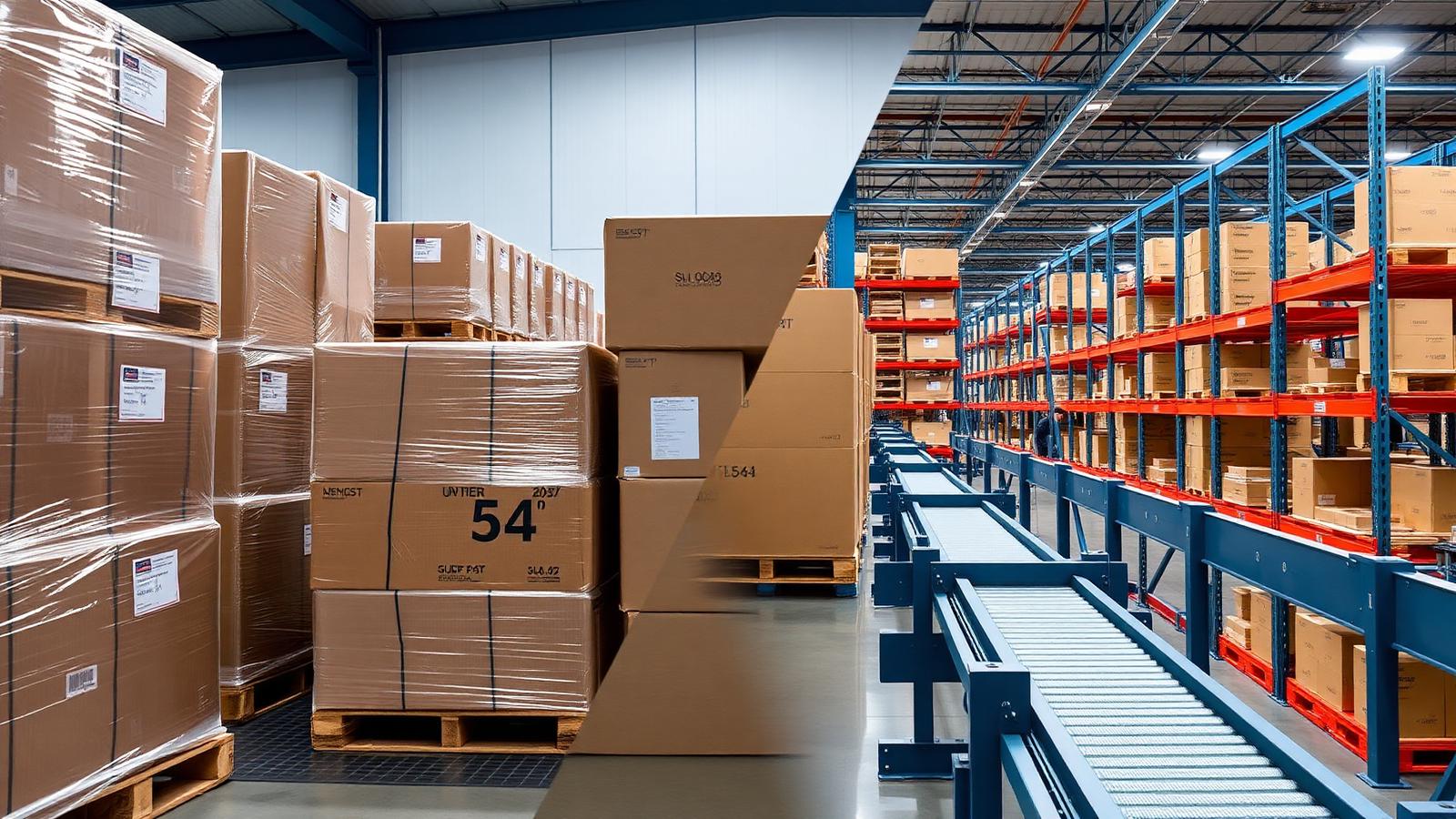
What is a bonded warehouse, and how is it different from a 3PL?
A bonded warehouse is a secure facility supervised by US Customs and Border Protection where imported goods can be stored duty-free until sold, exported, or formally entered into US commerce. A standard third-party logistics (3PL) provider handles storage and fulfillment for goods that have already cleared customs.
By the Seal Global Content & Search Strategy Team · August 21, 2026
Written by the operations enablement team that stands up importer of record status, customs bonds and first-shipment fulfillment for international brands entering the US.
"Bonded warehouse or 3PL?" is usually the wrong framing. They solve different problems at different points in the import chain, and most foreign brands entering the US end up using both. This guide sets out what each one actually does, when duty is paid, and how the handoffs are sequenced inside US market entry operations enablement programmes.
What Is a Bonded Warehouse, and How Is It Different From a 3PL?
What Is a Bonded Warehouse, and How Is It Different From a 3PL? A bonded warehouse is a secure facility supervised by US Customs and Border Protection where imported goods can be stored duty-free until sold, exported, or formally entered into US commerce. A standard third-party logistics (3PL) provider handles storage and fulfillment for goods that have already cleared customs. Foreign brands entering the US often need both: bonded storage to defer duty costs, and a 3PL to manage day-to-day order fulfillment.
The practical distinction is the moment money leaves your account. Duty, tariffs and merchandise processing fees hit at the point goods formally enter US commerce. A bonded warehouse moves that moment later; a 3PL assumes it has already happened.
Bonded Warehouse vs. Standard 3PL vs. Foreign Trade Zone
| Criterion | Bonded Warehouse | Standard 3PL | Foreign Trade Zone (FTZ) |
|---|---|---|---|
| Duty Payment Timing | Deferred until withdrawal for US consumption; no US duty if re-exported | Already paid — goods must clear customs before receipt | Deferred, reduced or eliminated; inverted tariff relief possible |
| Storage Duration Limits | Generally up to five years from importation | Commercially unlimited, priced per pallet or bin per month | Effectively indefinite while goods remain in the zone |
| Customs Oversight Level | High — CBP-supervised, bonded operator, strict recordkeeping | None directly; goods are in free circulation | High — zone status, activation and CBP procedures |
| Typical Use Case | High-duty goods, uncertain sell-through, re-export or awaiting regulatory clearance | Day-to-day DTC and B2B order fulfillment | Sustained high volumes, assembly or manufacturing before entry |
| Cost Structure | Premium storage rates plus per-withdrawal customs filings | Receiving, storage, pick, pack, materials and shipping fees | Setup and activation costs plus ongoing compliance overhead |
| Setup Complexity | Moderate — broker, bond and bonded operator agreement | Low — contract and systems integration | High — application, activation and formal procedures manual |
The Sequence Before Your First Shipment
- US entity and EIN so you can act as importer of record in your own name.
- Customs bond — usually a continuous bond if you will import regularly.
- HTS classification reviewed per SKU, with duty rates modelled into landed cost.
- Licensed customs broker appointed with a power of attorney on file.
- Partner-agency requirements checked — FDA, FCC, USDA and similar, where applicable.
- Storage decision made — bonded, 3PL, or bonded-then-3PL withdrawals.
- Systems integration and a test receipt before the full container lands.
Every step above has a dependency on the one before it, which is why brands that start with the warehouse conversation and leave the entity until later end up paying demurrage. If you are still at the planning stage, the sequencing is set out end to end in our expand your business to the USA programme.
The Landed Cost Question Nobody Models Early Enough
Duty deferral is a cash-flow instrument, not a discount. Bonded storage typically costs more per unit per month than commercial 3PL space, so the benefit only shows when duty rates are high or inventory turns slowly. Model both scenarios on your real SKU mix — duty, storage, per-withdrawal brokerage, transfer freight and fulfillment — before signing anything. That landed-cost model then needs to live in your accounting, which is where outsourced accounting services keep duty, freight and inventory valuation reconciled instead of arriving as a year-end surprise.
Who Owns the Handoff?
Three parties touch the same container: the customs broker files the entry, the bonded operator holds the goods, the 3PL fulfills the orders. None of them is contractually responsible for the other two. Assigning a single owner across all three is precisely what operations enablement for logistics and customs setup provides — and the reason first shipments land on schedule rather than sitting at port while three vendors wait on each other.
Related Reading
Related Services from Seal Global
US Market Entry Operations Enablement
Importer of record, customs bond, broker appointment and warehouse selection run as one plan.
Learn moreOperations Enablement for Logistics and Customs Setup
Bonded storage, 3PL contracting and clearance sequencing before your first shipment.
Learn moreUS Logistics & Fulfillment Enablement
From port to pick-and-pack, coordinated by one accountable team.
Learn moreExpand Your Business to the USA
The full set-up, launch and run programme for international brands.
Learn moreGlobal Capability Centers
Offshore operational capacity supporting your US supply chain and back office.
Learn moreFrequently asked questions
16 answers about bonded warehouse vs. 3pl.
1. Bonded Warehouse Basics
2. 3PL Fulfillment Basics
3. Customs & Duty Implications
4. Choosing the Right Option
Get customs, bonded storage and fulfillment sequenced correctly
We set up importer of record status, the customs bond, the broker and the warehouse as one dated plan.
Book a logistics readiness review