
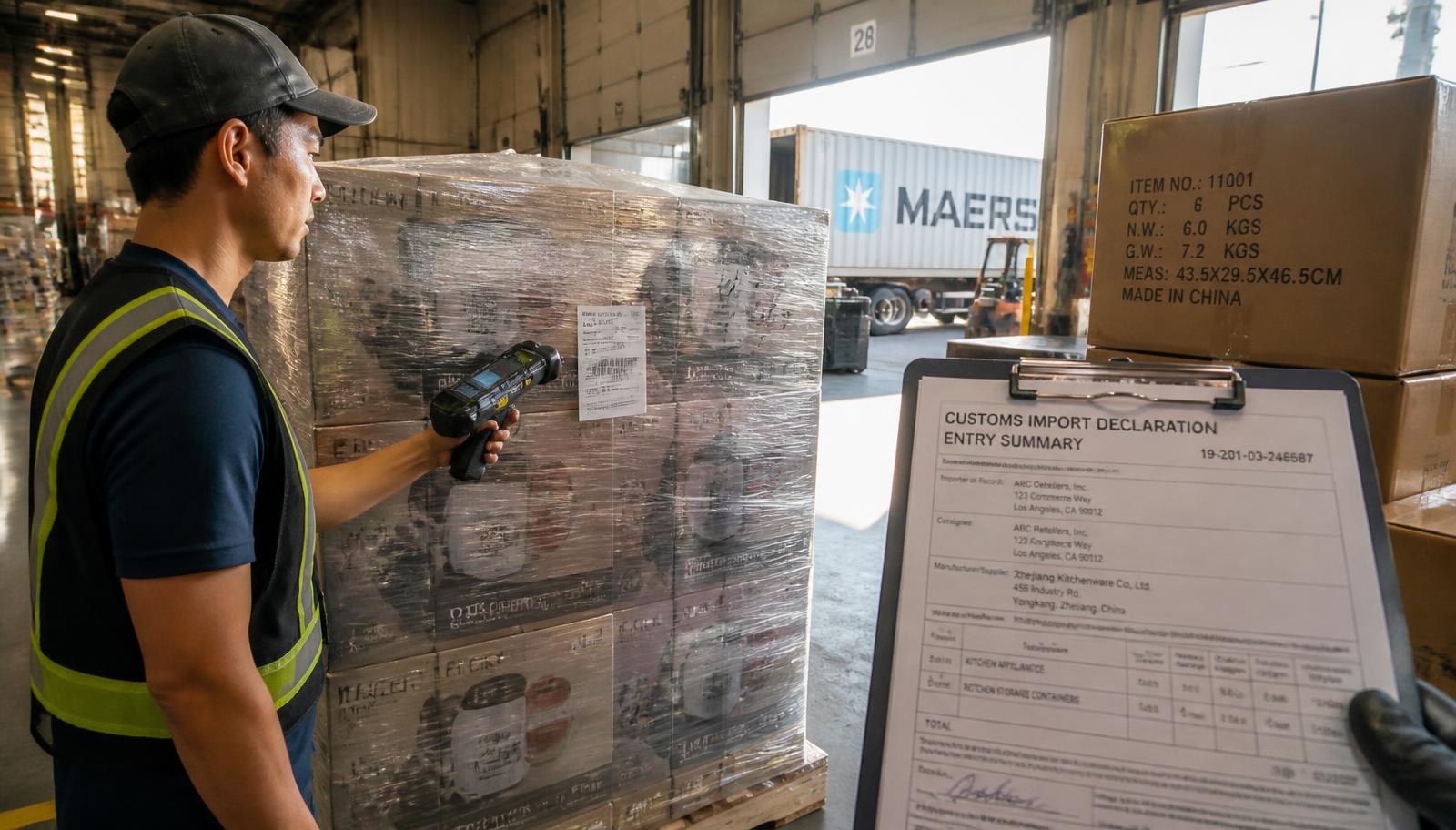
How long does it take a foreign brand to launch US fulfillment?
A prepared foreign consumer brand can move from a signed 3PL contract to a first US customer shipment in roughly 10 to 12 weeks. The critical path is rarely the warehouse itself: it is the customs bond, the Importer of Record designation, product compliance documentation and labeling, and the system integration between the store and the warehouse management system. Brands that start those four items in parallel with warehouse selection compress the timeline; brands that start them after the contract is signed usually add a month.
By the Seal Global Holdings Advisory Team, US Market Entry Practice · Published September 14, 2026. This is an illustrative composite drawn from several foreign-brand fulfillment launches our team has run; it is not a named client account, and details have been generalized.
A home and personal care brand in Curitiba had been shipping to US customers from Brazil for two years. The orders were real and growing; the economics were not. Transit ran two to three weeks, duties were charged unpredictably at the door, returns were effectively impossible, and the brand's US reviews had started describing delivery rather than the product. The decision to hold inventory in the United States was straightforward. The sequence to get there was not, and the brand's first instinct — find a warehouse — turned out to be the fourth item on the list rather than the first.
What a 3PL Is in a Market Entry Context
A 3PL (third-party logistics provider) is an outside company that receives, stores, picks, packs, and ships a brand's inventory from its own facility, under a service contract rather than a lease. Unlike renting or operating your own US warehouse, a 3PL carries the building, the labor, the equipment, and the warehouse management system, and charges for storage and activity instead of fixed square footage. For a foreign brand entering the US, that converts a capital and hiring project into a contract and an integration.
The distinction matters because a leased warehouse requires a US entity, US employees, workers' compensation coverage, equipment, and a manager on the ground. A 3PL requires a signed agreement, an inventory plan, and a systems connection. For a brand shipping a few thousand units a month, the second is the only rational starting point.
The Critical Path Nobody Expects
The brand's assumption was that warehouse selection was the long pole. It was not. Three items ran longer and had to start earlier: the customs bond application, the Importer of Record designation, and product compliance documentation for a personal care line — ingredient disclosures, labeling that met US requirements in English with correct net-quantity statements, and safety data for the components that needed it. Relabeling in Brazil before shipment turned out to be considerably cheaper than relabeling at a US warehouse, and that decision had to be made before the first container loaded.
The Importer of Record question also forced the entity question. A foreign company can be the importer of record, but a US entity with an EIN simplifies the bond, the broker relationship, and the 3PL contract, and the brand wanted a US entity for merchant processing anyway. Formation therefore moved to week one rather than week eight. That reordering — driven by the customs requirement rather than the corporate one — is the single most common adjustment we make when a brand brings us a fulfillment plan, and it is why the operations enablement sequence runs entity, compliance and logistics as one schedule rather than three projects.
US Fulfillment Setup Timeline
| Week | Milestone | Owner | Blocks what |
|---|---|---|---|
| Week 1 | US entity formed, EIN application submitted, 3PL shortlist issued with volume and SKU profile | Operations partner | Bond, broker onboarding, 3PL contracting |
| Weeks 2-3 | 3PL site visits and scorecard; customs broker engaged; continuous customs bond application filed | Operations partner and broker | First entry filing |
| Weeks 3-4 | Importer of Record designated; power of attorney executed with the broker; HTS classification confirmed per SKU | Brand and broker | Duty estimates, landed cost model |
| Weeks 4-5 | Product compliance pack assembled: US labeling artwork, ingredient and net-quantity statements, safety documentation | Brand with compliance review | Production run and container loading |
| Week 5 | 3PL contract signed; SLAs, receiving standards and chargeback schedule agreed | Brand and operations partner | Integration kickoff |
| Weeks 6-7 | Store-to-WMS integration built and tested; SKU master, barcodes and packaging rules loaded | 3PL and brand systems team | Order release |
| Weeks 7-8 | First container loaded in Brazil with relabeled stock; commercial invoice and packing list reviewed pre-departure | Brand and broker | Entry and clearance |
| Weeks 9-10 | Ocean transit; entry filed before arrival; duties and fees settled; release obtained | Broker | Warehouse receiving |
| Week 10 | Drayage to the 3PL; receiving, count reconciliation and putaway; cycle count against the shipping manifest | 3PL | Inventory availability |
| Week 11 | Pilot orders released to internal addresses; packaging, carrier rates and returns path validated | Brand and 3PL | Public cutover |
| Week 11 (day 75) | Storefront switched to US fulfillment; first customer shipment leaves the warehouse | Brand | — |
What Changed After Cutover
Delivery moved from a two-to-three-week international transit to domestic ground service, and the duty-at-the-door surprise disappeared from the customer experience because duty was now paid once, at import, by the brand. Returns became possible at all, which changed what the brand could promise on the product page. The operational load did not vanish; it relocated. Someone now had to reconcile landed cost per SKU, chase receiving discrepancies, review the 3PL's activity billing line by line, and answer US-hours customer questions about shipments. The brand handed the ledger side to a back-office team rather than hiring for it in Curitiba, and kept merchandising in house.
What we would do differently
Two things. Start the compliance labeling review in week one rather than week four — it was the only item that nearly slipped the schedule, because artwork changes had to clear a production run in Brazil. And write the receiving standard into the 3PL contract with more specificity, because the first count discrepancy is much easier to resolve when the agreement already says how pallets are labeled, how cartons are marked, and what happens when they are not. Both are now standard in how we run US warehousing and customs setups, and both sit inside the wider market entry operations program rather than being left to the warehouse to raise.
Related services from Seal Global
US Market Entry & Operations Enablement
Entity, customs, warehousing and back-office sequenced as one program.
Learn moreUS Warehousing, Logistics & Customs
3PL selection, customs bonds, Importer of Record and inbound coordination.
Learn moreMap Your US Fulfillment Launch
A working session on the 75-day sequence for your product category.
Learn moreBack-Office Outsourcing
Landed-cost reconciliation, supplier payables and inventory reporting.
Learn moreUS Entity Incorporation Services
Formation and EIN, which most 3PL and customs paperwork depends on.
Learn moreEcommerce Customer Support
US-hours support coverage from the first shipment onward.
Learn moreFrequently asked questions
15 answers about brazilian brand us fulfillment.
1. 3PL & Warehousing Basics
2. Customs & Compliance
3. Timeline & Costs
4. Choosing a Partner
The warehouse is the easy part
We sequence the entity, the bond, the Importer of Record designation, compliance documentation and the 3PL integration so the first shipment is not the first test.
Talk to our US market entry team