
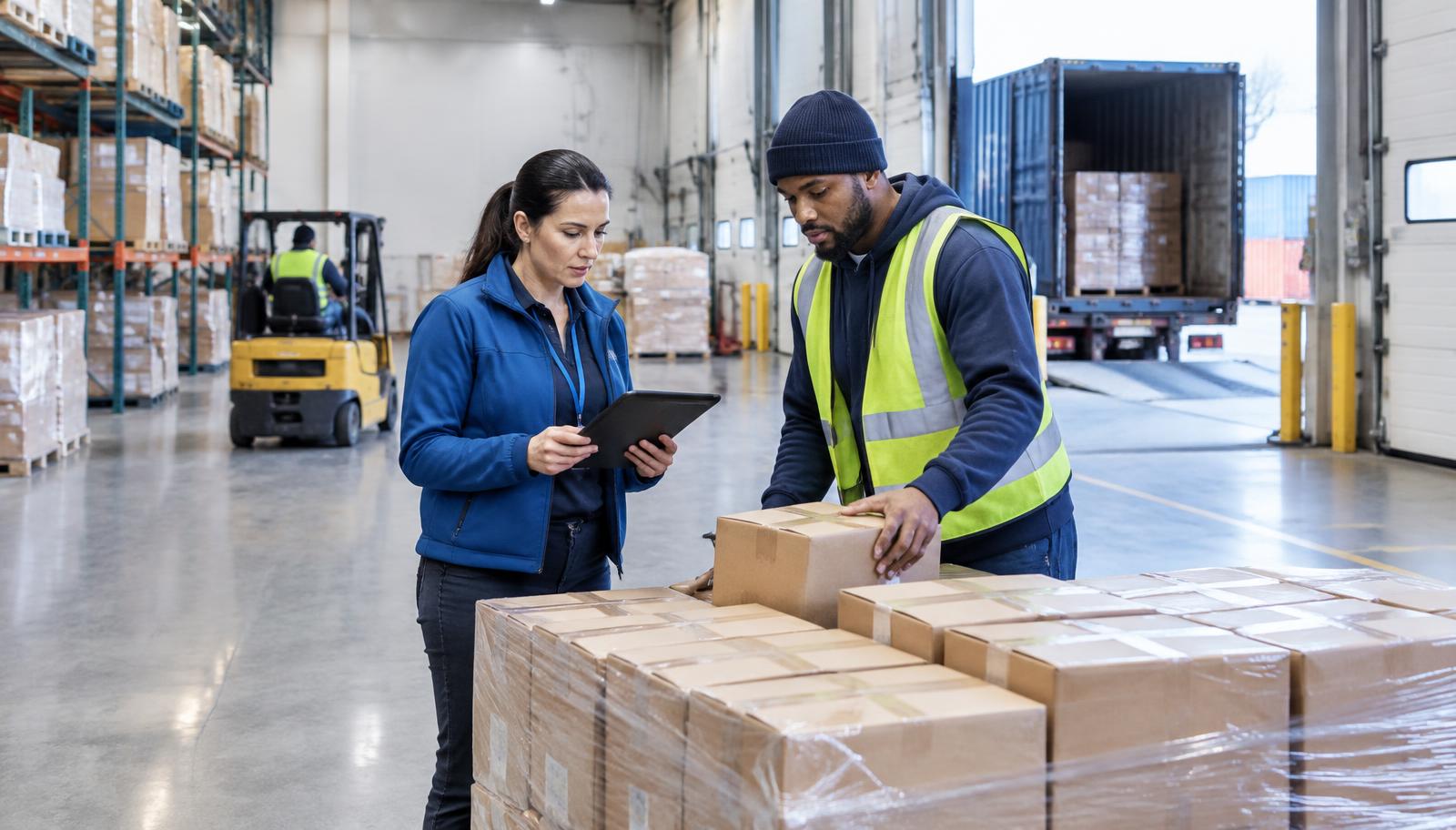
What is US warehouse and 3PL setup for a foreign e-commerce brand?
US warehouse and 3PL setup is the coordinated process of selecting a US inventory location and fulfillment provider, arranging importer-of-record and customs clearance, validating product compliance, and connecting order and inventory systems. The warehouse receives and dispatches goods, but the foreign brand must separately resolve its legal, tax, and operational responsibilities before inventory arrives.
US warehouse setup for foreign e-commerce brands is not just a choice of storage space. A 3PL can receive, store, pick, pack, and ship inventory, but it cannot by itself decide who legally imports that inventory, whether products meet US rules, or how the brand will account for stock across borders. Those decisions belong in the operating plan before the first purchase order is routed to a US dock.
What US Warehouse and 3PL Setup Covers
US warehouse and 3PL setup is the coordinated process of selecting a US inventory location and fulfillment provider, arranging importer-of-record and customs clearance, validating product compliance, and connecting order and inventory systems. The warehouse receives and dispatches goods, but the foreign brand must separately resolve its legal, tax, and operational responsibilities before inventory arrives.
In practice, the physical move is one part of US market entry operations enablement. A freight forwarder moves cargo, a customs broker files entries, and a warehouse handles inventory. The brand needs a named owner to confirm where each responsibility begins and ends. A provider's ability to store goods is not proof that the goods can lawfully be imported or sold.
1. Choose the Warehouse Model Before Choosing an Address
A shared 3PL uses a provider's existing space, labor, warehouse management system, and carrier accounts. A dedicated facility reserves capacity and operating processes for one brand, whether leased directly or operated by a logistics provider. A bonded warehouse is a customs-controlled storage arrangement for imported goods under bond; it is not simply a premium version of an ordinary 3PL. Some providers offer more than one model, but the customs treatment must be checked for the actual facility and product flow. The US warehousing, logistics, and customs workstream should test each option against inventory ownership, service requirements, and import status.
| Decision | Shared 3PL | Dedicated warehouse | Bonded warehouse |
|---|---|---|---|
| Setup | Provider onboarding, inventory mapping, integration, and first receipt. | Site and lease or operating agreement, fit-out, staffing, systems, and safety procedures. | Confirm bonded status, bond and broker arrangements, admissibility, and release process. |
| Cost structure | Receiving, storage, pick-pack, returns, and minimum or integration charges. | Fixed facility and labor commitments plus equipment, systems, utilities, and freight. | Storage and handling plus bond, customs administration, and release charges. |
| Customs treatment | Ordinary domestic storage after lawful entry or release. | Usually ordinary domestic storage unless separately approved as bonded. | Goods remain under customs control; duties generally depend on withdrawal for US consumption. |
| Control and fit | Useful while volumes and geography remain uncertain; processes follow a shared operation. | Useful when stable volume or specialized handling justifies fixed capacity and greater control. | Useful where duty timing, re-export, or customs-controlled storage is material; not a substitute for retail fulfillment by default. |
Ask each 3PL which facilities will hold the stock, whether inventory may be moved between states, what its receiving tolerances are, and which exception reports it produces. Location should be evaluated against the actual inbound port, domestic line-haul, customer delivery zones, and return destinations, not a map's midpoint alone. A low-cost facility can become expensive when inbound drayage, split inventory, and carrier surcharges are included.
2. Customs Clearance and Import Compliance
Importer of record and first-shipment documents
Before freight is booked, identify who will act as importer of record (IOR), who engages the customs broker, and who supplies the customs bond. A foreign company may be able to import as a nonresident IOR if it meets the applicable customs requirements; a US subsidiary is not automatically required for every shipment. Neither the 3PL nor the broker becomes the IOR simply because it handles the boxes or files an entry. Incorporation, an EIN, and the banking path should be assessed on their own merits with advisers; see the US entity incorporation services route where a domestic operating company is needed.
The document packet typically includes a commercial invoice with accurate descriptions and values, packing list, transport document, tariff classification, country-of-origin information, broker authorization, and bond arrangements. Ocean freight also brings advance filing requirements. Product-specific declarations, permits, labeling evidence, or test reports may be needed depending on the goods. Confirm the packet with the broker before dispatch, not while cargo waits at the port.
FDA, CPSC, and FCC checks
Food, cosmetics, medical products, and other FDA-regulated goods can trigger agency-specific rules; children's products and other covered consumer goods may require CPSC testing and certificates; radio-frequency devices can require FCC authorization or compliance documentation. The agency and obligation depend on the product, not the foreign seller's industry label. Ask qualified counsel or a product-compliance specialist to check the exact SKU, claims, labeling, and origin before the US production run. The customs and logistics setup must also specify who handles an examination, hold, refusal, or re-export: a warehouse receipt does not cure an inadmissible import.
3. Set the Operating Sequence and Realistic Timeline
Several tasks can proceed together, but receiving cannot be treated as the first compliance milestone. The reference sequence below describes dependencies rather than a guaranteed calendar; first-time imports, regulated products, facility fit-out, and system work can extend it.
| Stage | Owner and output | Gate before the next stage |
|---|---|---|
| Product and legal scoping | Brand and advisers confirm SKU compliance, import structure, inventory ownership, and state footprint. | Documented IOR and product-compliance path. |
| Partner selection | Operations team compares facilities, service levels, minimums, insurance, and returns handling. | Signed scope stating facility locations and data access. |
| Customs preparation | Importer and broker validate invoice data, classification, origin, bond, and required filings. | Broker accepts the complete first-shipment packet. |
| Systems and test orders | Brand and 3PL map SKUs, order feeds, stock changes, tracking, returns, and exceptions. | Test orders and inventory reconciliation pass. |
| Inbound and go-live | Broker confirms release; warehouse checks units and condition against the advance shipment notice. | Received stock reconciles with the brand's system before orders are released. |
For a shared 3PL with compliant goods and ready systems, plan in weeks rather than days; a dedicated site or regulated product may take substantially longer. Customs release itself varies with entry completeness, examination, agency review, and port conditions. A single operations enablement plan keeps the legal, finance, broker, and facility dependencies visible against the same first-receipt date.
4. Model Costs, Systems, and Returns Together
Ask for a rate card with receiving by pallet or unit, monthly storage basis, pick-and-pack increments, packaging materials, carrier charges, return inspection, disposal, account management, integration, and minimum monthly commitments. Quote the same SKU mix, dimensions, expected order profile, and return assumptions to every shortlisted provider. Without those inputs, a quoted price per order is not comparable. Duties, taxes, freight, customs brokerage, and compliance work sit outside many 3PL proposals.
A Shopify or other storefront integration should be tested end to end: orders into the warehouse system; available-to-promise inventory back to the storefront; shipment status and tracking back to the customer record; cancellations and returned stock reflected without double counting. Document who resolves mismatched SKUs, oversells, damaged units, and orders that miss the cutoff. In a returns flow, define where customers ship goods, who authorizes a return, when items can be restocked, and how refunds reconcile to physical inventory. These are operating controls, not just software settings.
Storage in a state can create sales-tax obligations even if the brand has no office there; moving stock into a second facility may change the registration picture. A directly operated warehouse also raises hiring, workplace, insurance, and payroll decisions. If the brand plans its own US staff, evaluate the employment and payroll compliance route alongside the lease and staffing model.
5. Assign Ownership After the First Shipment
The initial inbound milestone is not the end of setup. Name an internal owner for monthly inventory reconciliation, receiving discrepancies, customs record retention, rate-card reviews, state footprint changes, service-level exceptions, and returns disposition. A foreign brand can manage these relationships itself, but it must coordinate brokers, 3PL operators, advisers, and finance across time zones. An operations partner can maintain that shared workplan; neither arrangement transfers the brand's legal duties by default.
That is the practical test of a US inventory footprint: each shipment has a lawful entry route, each unit has a recorded location and owner, and each exception has someone empowered to act. The US operations infrastructure around the warehouse should be ready to support those decisions before volume increases.
Related Services and Reading
Related Services from Seal Global
US Market Entry Operations Enablement
Coordinate legal, financial, employment, and logistics decisions across one operating plan.
Learn moreUS Entry Process
Sequence the operational dependencies before the first inbound shipment.
Learn moreUS Warehousing, Logistics & Customs
Plan 3PL selection, import clearance, and fulfillment operations.
Learn moreUS Warehouse Setup Checklist
Use the practical setup sequence once the operating model is chosen.
Learn moreBonded Warehouse vs. 3PL
Compare customs status and fulfillment responsibilities.
Learn moreFrequently asked questions
18 answers on warehouse selection, customs, costs, timelines, and operational ownership.
1. Choosing a Warehouse & 3PL Model
2. Customs, Compliance & Import Requirements
3. Costs, Timelines & Operations
4. Operations Enablement vs. Going It Alone
Make the first shipment an operating decision
Review importer-of-record coverage, product requirements, facility terms, and the systems that connect them.
Discuss US operations readiness