
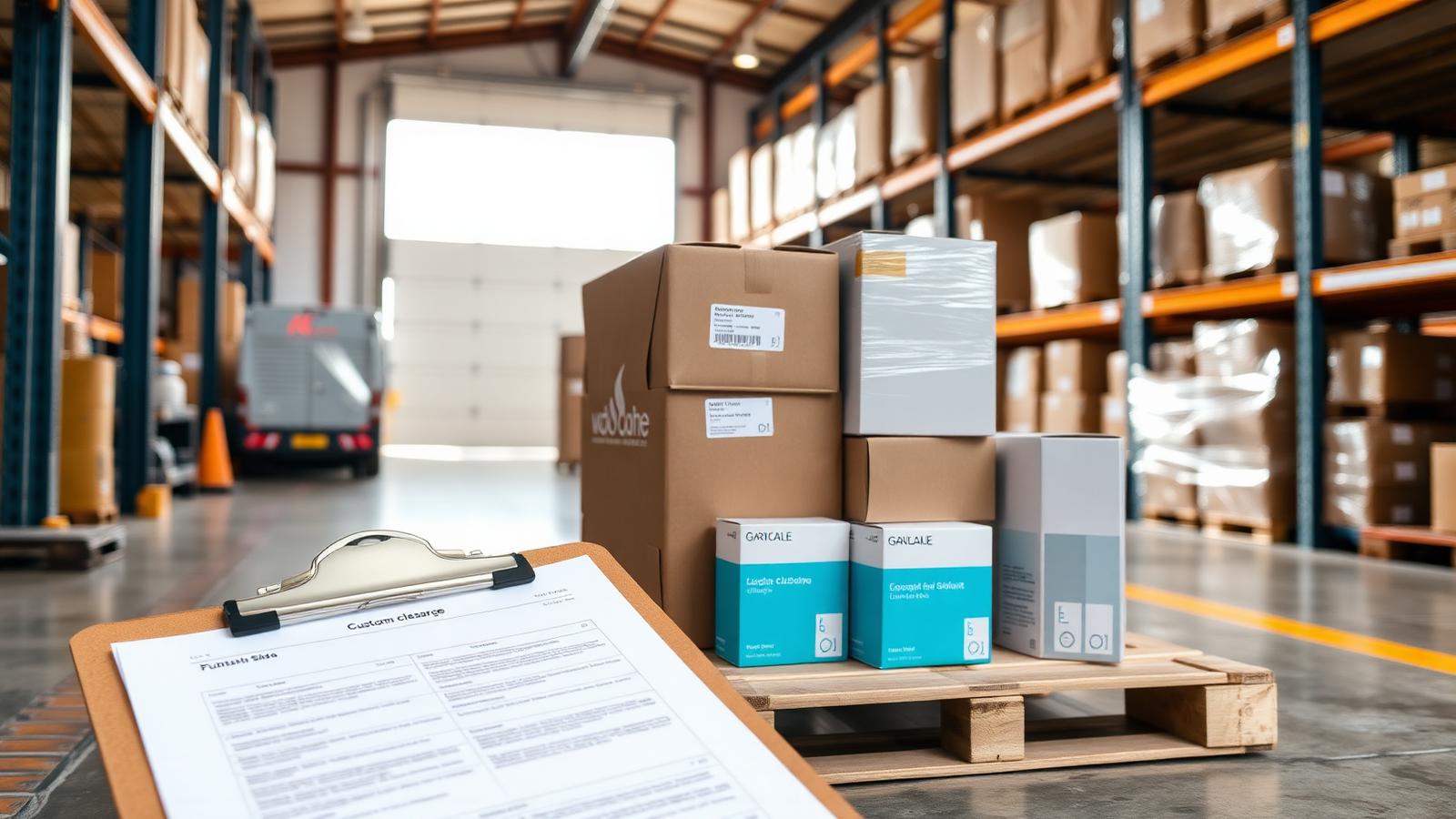
What is US customs clearance?
US customs clearance is the process of declaring imported goods to US Customs and Border Protection, paying applicable duties, and satisfying product-specific compliance requirements before goods can legally enter US commerce and reach a 3PL warehouse or fulfillment center.
By the Seal Global Content & Search Strategy Team · August 18, 2026
Written by the operations enablement team that structures importer of record status, customs bonds and 3PL onboarding for foreign brands landing their first US inventory.
Note: this case study is an illustrative composite drawn from several comparable engagements. The brand — referred to here as "Coastline Botanicals" — is a descriptive placeholder, not a named client, and no figures should be read as a specific client's results.
Coastline Botanicals is an Australian wellness and skincare brand doing roughly AUD 6 million a year through its own store and two domestic marketplaces. It had US demand it was servicing badly: international shipping from Sydney at AUD 38 a parcel, ten-to-fourteen-day delivery, and a return rate that made the channel unprofitable. The goal was straightforward — get inventory into a US warehouse. The path there ran through customs, and that is where most brands lose a month. This is the week-by-week record of how it went, and where US market entry operations enablement changed the sequence.
What Is US Customs Clearance?
US customs clearance is the process of declaring imported goods to US Customs and Border Protection, paying applicable duties, and satisfying product-specific compliance requirements before goods can legally enter US commerce and reach a 3PL warehouse or fulfillment center.
The definition contains the trap. "Product-specific compliance requirements" for skincare means FDA jurisdiction under MoCRA — facility registration and product listing — which is a workstream with its own lead time, and it is not something a freight forwarder will complete for you.
Week-by-Week: Import to First US Fulfillment
| Week / Phase | Key activity | Owner | Typical duration |
|---|---|---|---|
| Week 1 — Structure | Delaware C-Corp formed, registered agent appointed, SS-4 filed by phone for the EIN | Operations enablement partner | 5 business days |
| Week 2 — Compliance scoping | FDA MoCRA facility registration and product listing, ingredient and label review, HTS pre-classification | Operations enablement partner + customs broker | 7–10 days |
| Week 3 — Bond & IOR | Continuous customs bond secured, CBP power of attorney executed, importer of record confirmed as the US entity | Customs broker | 5–7 days |
| Week 3–4 — 3PL selection | Three New Jersey 3PLs shortlisted, rate cards compared, services agreement signed | Brand + operations enablement partner | 10 days |
| Week 4 — Banking | US bank account opened on the EIN; duty and brokerage payment method established | Operations enablement partner | 2–4 weeks (started week 1) |
| Week 4–5 — Sail & ISF | Importer Security Filing lodged 24h before loading; commercial invoice and packing list finalised | Customs broker | 2 days |
| Week 5 — Integration | Store-to-WMS integration, SKU and barcode setup, packaging spec, test order cycle | 3PL + brand | 10–14 days (in parallel with transit) |
| Week 6 — Clearance | CBP entry filed on arrival, FDA prior notice reviewed, duties paid, cargo released | Customs broker | 48 hours |
| Week 6–7 — Live | Drayage to warehouse, receiving and putaway, first US orders shipped | 3PL | 5 business days |
Where It Nearly Went Wrong
1. The 3PL Would Not Contract With the Australian Entity
The preferred warehouse required a US entity, an EIN and a US bank account before signing — standard practice, and a hard stop if formation has not started. Because the entity was filed in week 1, the contract signed in week 4 instead of week 12.
2. HTS Classification Was Nearly Left to the Forwarder
Two SKUs contained an active ingredient that changed the classification and pulled in an additional FDA requirement. A pre-shipment review by the licensed broker caught it. Misclassification is the most common source of retroactive duty bills, and the importer of record — not the broker — carries the liability.
3. Nobody Owned the Document Trail
Between the forwarder, the broker, the 3PL and the brand there were four parties and no single records owner. CBP requires entry records to be retained for five years. Handing that to a back office outsourcing team gave the brand one place where bonds, entries, 7501s and 3PL receiving reports actually live.
The Cost Picture
Customs-related cost landed at roughly 4% of goods value: brokerage at $165 per entry, the merchandise processing fee at 0.3464%, the harbour maintenance fee at 0.125%, and duty at the applicable cosmetics rate. Freight and drayage sat on top. Getting duty and freight into cost of goods correctly — rather than dumping them into an expense line — was handled by the same finance team that runs outsourced accounting for UK and other foreign parents, because landed cost accuracy is what makes the US channel's margin legible to the board.
The Result
Forty-five days from kickoff to first US-fulfilled order. Delivery time to US customers fell from ten-to-fourteen days to two-to-three. Per-parcel shipping cost fell by roughly 70%, and the channel moved from loss-making to contributing margin within the first full month. None of that came from better marketing; it came from doing the infrastructure in the right order. That sequencing is the whole substance of operations enablement for foreign companies.
Related Services from Seal Global
US Market Entry & Operations Enablement
Entity, importer of record readiness, bonds and 3PL contracting sequenced to a dated plan.
Learn moreOperations Enablement for Foreign Companies
The workstream that makes a customs bond and warehousing contract possible.
Learn moreBack Office Outsourcing
Document control and vendor administration across brokers, carriers and warehouses.
Learn moreOutsourced Accounting Services
Landed cost accounting, duty reconciliation and sales tax nexus filings.
Learn moreUS 3PL Warehouse Setup Checklist
The checklist version of the warehouse phase described in this case study.
Learn moreFrequently asked questions
15 answers about australian brand us customs & 3pl case study.
1. Customs & Compliance Basics
2. 3PL & Warehousing Setup
3. Timeline & Costs
4. Lessons Learned
Land your first US shipment without demurrage
We build the entity, importer of record status, bond and 3PL contract in the right order — then govern the specialists.
Book a US import readiness review