
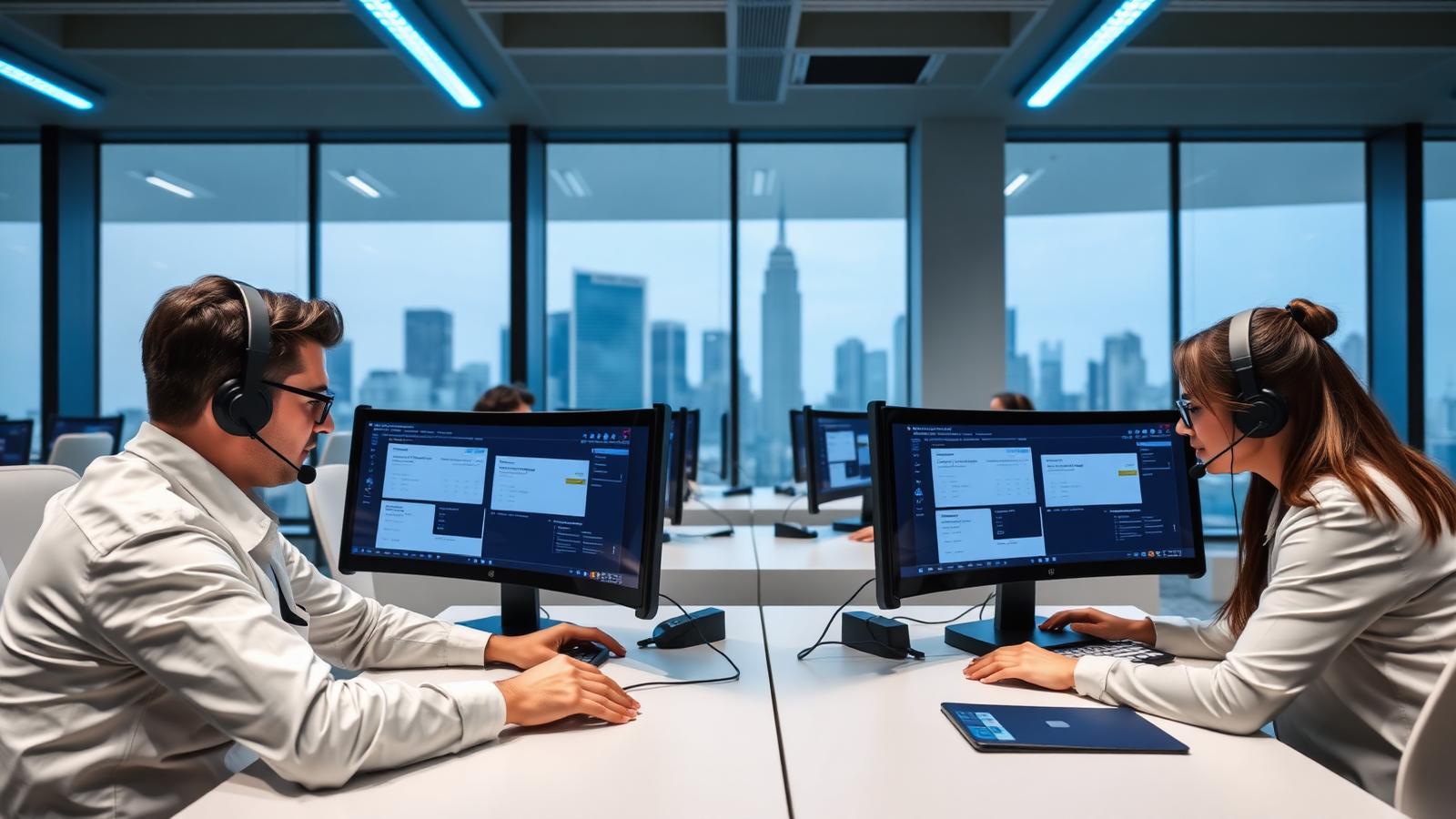
What is US-localized customer support outsourcing?
US-localized customer support outsourcing is the practice of running a foreign company's US customer service through an outsourced team that operates on US time zones, uses US English and US-market context, and answers on a US phone number and domain. It exists so buyers experience a domestic company rather than an overseas vendor, and it is typically stood up in four to eight weeks once a US entity and support stack are in place.
Foreign companies entering the United States usually get the product, pricing and website right and then let support run from the home country for "the first few months". US buyers notice within a week. A 9am email answered at 6pm, a support number that rings in another country, spelling and returns language that reads foreign — each one quietly tells a US customer this is not a domestic company. This is the checklist we run before a client's first US order lands.
What Is US-Localized Customer Support Outsourcing?
US-localized customer support outsourcing is the practice of running a foreign company's US customer service through an outsourced team that works US time zones, uses US English and US-market conventions, and answers on a US phone number and domain. Its purpose is to make the buying experience feel domestic rather than offshore. A functioning desk is normally live in four to eight weeks once the US entity, phone number and support stack exist.
1. Fix Coverage Hours Against Your Real Demand Curve, Not the Clock
US coverage is not one time zone. A desk staffed 9am–5pm Eastern is closed at 6am for California and still leaves the Pacific afternoon peak unmanned. Pull the timestamp distribution of your existing enquiries, weight by revenue rather than volume, and set coverage to 8am Eastern through 6pm Pacific as the default — thirteen hours, which two shifts cover cleanly. Weekend coverage matters for consumer brands and rarely for B2B.
2. Decide the Hiring Model Before You Shortlist Vendors
There are three viable models: US-based agents employed through an employer of record while your entity matures, a nearshore or offshore pod trained on US conventions, or a hybrid where US-based seniors handle escalation and voice while a pod carries email and chat volume. The hybrid is what most mid-market entrants land on, because voice is where accent and context are audible and email is where they are not.
3. Establish a Real US Presence Layer
A US local or toll-free number, a support@ address on your US domain, a US mailing address on correspondence, and US-format dates, currency and units. This is cheap and it is the single largest perception lever in the whole list. It also depends on the entity, banking and address work being done first — which is why we run it inside our US market entry and operations enablement program rather than as a separate support project.
4. Choose the Stack Once and Instrument It
One helpdesk of record (Zendesk, Gorgias, Front or Intercom), one telephony layer, one knowledge base, and CRM and order-system integrations wired on day one. If agents have to alt-tab into your order system to answer "where is my package", handle time doubles and first-contact resolution collapses. Insist on API access rather than screenshots.
5. Write the US Playbook Before Go-Live
Refund and returns wording that matches US consumer expectations, warranty language reviewed against state law, escalation thresholds, and tone guidance. US customers escalate faster and expect a resolution offer in the first reply, not a case number. Budget forty to sixty macros before launch and expect to double them in quarter one.
6. Set SLAs With Numbers and Remedies
First response under one hour on email, under thirty seconds on voice answer, resolution within one business day for tier-one issues, CSAT floor of 90%, and quality-monitoring coverage of at least 5% of contacts. A vendor unwilling to attach a credit to a missed SLA is quoting an aspiration.
7. Close the Compliance Gaps Most Entrants Miss
Call recording consent varies by state and several require all-party consent. TCPA governs outbound calls and texts. CCPA and its successors give California residents deletion and access rights your agents must be able to action. Payment details must never be captured in a ticket body. If support touches invoices, refunds or chargebacks, tie it into your outsourced accounting workflow so the ledger and the ticket never disagree.
8. Report on Outcomes, Not Ticket Counts
Track contacts per order, first-contact resolution, CSAT by channel, escalation rate, refund rate driven by support decisions, and cost per contact. Ticket volume is a workload number, not a performance number. Review monthly for the first quarter, then quarterly.
In-House US Support vs Outsourced US Support: The Comparison
| Dimension | In-house US team | Outsourced US-localized desk | Hybrid (US leads + pod) |
|---|---|---|---|
| Time to live | 3–5 months (entity, payroll, hiring) | 4–8 weeks | 6–10 weeks |
| Fully loaded cost per agent / month | $5,500–$8,000 | $2,200–$4,000 | $3,000–$5,000 blended |
| Entity required first | Yes (or EOR) | Not always — vendor contracts can precede it | EOR for the US leads |
| Coverage flexibility | Low — shift changes mean rehiring | High — hours flexed monthly | High on pod, low on leads |
| Product depth after 6 months | Highest | Good with dedicated agents, weak on shared pools | High where leads own escalation |
| Compliance burden | Yours entirely | Shared, contractually allocated | Shared |
| Best fit | Post-traction, complex product | Launch through first 18 months | Regulated or high-ACV B2B |
What This Costs and How Long It Takes
A two-agent equivalent US-localized desk with thirteen-hour coverage, helpdesk licensing, telephony and QA typically runs $5,000–$8,000 a month in year one, and takes four to eight weeks to stand up when the entity work is already underway. Companies that try to bolt support on after launch pay for it twice — once in vendor onboarding and again in the churn from the first bad month.
Where Support Sits in the Wider US Entry Program
Support is a downstream system. It depends on the entity, the US number and address, the payment and refund rails, and the order data. When those are sequenced together the desk goes live on schedule; when support is procured in isolation it waits. That sequencing is the whole point of operations enablement for US market entry, and it is why we scope support alongside back-office operations rather than after them.
Related Services from Seal Global
US Market Entry & Operations Enablement
Entity, banking, payroll, back office and support stood up as one program.
Learn moreUS Operations Infrastructure Build
The sequencing plan that puts support live at the same time as your first US orders.
Learn moreCustomer Support Outsourcing
US-hours voice, email and chat support run to published SLAs.
Learn moreBack Office Outsourcing
Order admin, refunds, returns and escalation handling behind the support desk.
Learn moreEmployer of Record & Payroll Compliance
Hire US-based support staff compliantly before your entity can run payroll.
Learn moreGlobal Capability Centers
Move from outsourced pods to an owned support centre as volume scales.
Learn moreFrequently asked questions
16 answers about us customer support outsourcing.
1. Getting Started & Coverage
2. Costs & Staffing Models
3. Quality, SLAs & Tooling
4. Compliance & Risk
Get your US support desk live with your launch
We will map coverage hours, hiring model, tooling and QA against your launch date and volume forecast.
Book a support readiness review