
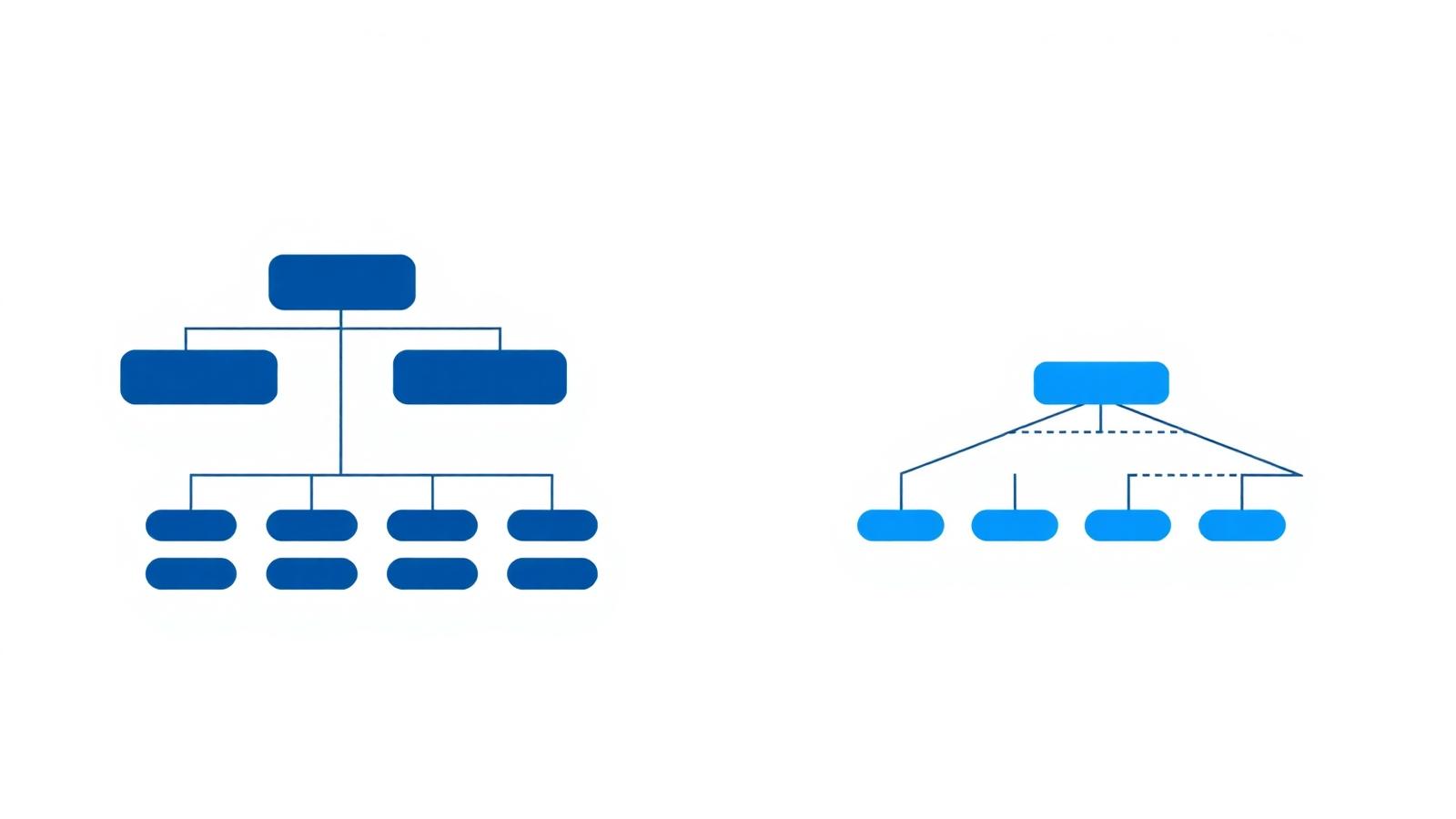
What is the difference between a US subsidiary and a branch office?
A US subsidiary is a separate legal entity — usually an LLC or C-Corp incorporated in a US state — that pays US corporate tax on its own income and shields the foreign parent from most US liabilities. A branch office is a registered extension of the foreign parent with no separate legal identity, so the parent is taxed directly on US-sourced income and carries full liability. Most foreign companies choose a subsidiary because US banks, enterprise buyers and insurers expect one.
By the Seal Global Editorial Team · August 7, 2026
Most foreign companies entering the United States default to "let's just incorporate something" — and only later discover that a subsidiary and a branch office produce very different tax, liability, and banking outcomes. The wrong choice is not fatal, but it is expensive to unwind: converting a branch into a subsidiary means new filings, a new EIN, migrated contracts, a new bank relationship, and often a fresh round of customer paperwork. It is worth an hour of thinking before the first form is filed.
What Is a US Subsidiary vs. a Branch Office?
A US subsidiary is a separate legal entity (an LLC or C-Corp) incorporated in a US state, while a branch office is a registered extension of the foreign parent with no separate legal identity. The subsidiary shields the parent from most US liabilities; the branch does not.
That single structural difference — separate legal person versus extension of the same legal person — is what drives every other difference below. Everything from how profits are taxed to whether a Fortune 500 procurement team will sign your contract traces back to it, which is why structure selection is the first decision in any US market entry operations enablement program rather than an afterthought.
| Factor | Subsidiary | Branch Office |
|---|---|---|
| Legal separation from parent | Yes — separate legal entity | No — same legal entity as parent |
| Tax treatment | US corporate tax on its own income; dividends to parent may face withholding | US-sourced income taxed on the parent's US return; branch profits tax on repatriation |
| Liability exposure | Generally limited to subsidiary assets | Extends to the foreign parent |
| US banking ease | Standard onboarding; expected by most banks | Possible, but underwriting is often more cautious |
| Typical setup time | 3–6 weeks including EIN and banking | 1–2 weeks for state registration |
| Cost to unwind | Formal dissolution, final tax filings, asset distribution | Simpler deregistration; no entity to dissolve |
Tax Treatment Compared
A subsidiary is taxed as a US taxpayer in its own right: it pays federal and state corporate tax on its own income, and when it sends profits home as dividends, those dividends may face withholding tax — often reduced by an applicable treaty. A branch is different. Its US-sourced income is taxed directly on the foreign parent's US return, and when branch earnings are treated as repatriated, a separate branch profits tax — generally 30% unless a treaty reduces it — can apply on top of regular corporate tax.
In practice, the branch profits tax is the single most common reason companies that start as a branch convert to a subsidiary once profitable. Modelling the effective rate across both structures, including treaty relief and any debt financing, is a finance exercise most entrants run past fractional CFO services before they file, because the difference over three years is usually far larger than the setup cost gap.
Liability Exposure: Why Most Foreign Companies Choose a Subsidiary
The United States is a materially higher-litigation environment than most home markets. With a subsidiary, a US lawsuit typically stops at the subsidiary's own assets. With a branch, there is no wall — the claimant is suing the parent, because legally the branch is the parent. For any company selling physical products, employing US staff, or signing service agreements with liability clauses, that separation is usually worth the extra formation cost and the ongoing filing obligations that come with it.
Banking and Contracting Differences
US banks can open accounts for branch offices, but they generally require the same documentation as a subsidiary — EIN, registered agent, proof of registration — and some underwrite branch accounts more cautiously because the ultimate liability sits offshore. Enterprise buyers behave similarly: many procurement teams strongly prefer contracting with a US-incorporated counterparty because it simplifies their legal review, payment rails and tax reporting. That makes a subsidiary a practical sales requirement before it is a tax requirement. Whichever structure you choose, the monthly close, payroll funding and reconciliation behind the account usually sit with outsourced accounting services until the US team is big enough to carry them.
Setup Timeline and Cost Compared
- Branch office: one to two weeks in most states for registration and a registered agent.
- Subsidiary: three to six weeks including formation, EIN issuance as a foreign-owned entity, and initial bank onboarding — longer if the bank requires an in-person signer.
The formation filing itself is rarely the bottleneck in either case. The EIN, the bank, and the state tax registrations are.
Which Structure Fits Your Market Entry Plan?
Work through four questions: how much liability exposure the US activity actually creates; whether you will hire US employees or sign enterprise contracts in the first year; what your home country's tax treaty with the US says about branch profits and dividend withholding; and how quickly you need to be operational versus how much you are willing to spend on formation and ongoing compliance.
A common and sensible path is to start light — a branch registration or an employer of record — and convert to a full subsidiary once revenue, headcount or contract requirements justify the added cost and liability separation. Sequencing that conversion so it lands before your first large enterprise contract, rather than after, is exactly the kind of planning a US market entry and operations enablement partner exists to run.
Related Reading
Related services from Seal Global
US Market Entry & Operations Enablement
Entity structure, incorporation, banking and compliance run as one program.
Learn moreUS Entity Formation Support
Subsidiary or branch registration, EIN, registered agent and state filings.
Learn moreFractional CFO Services
Model the tax-treaty and repatriation impact of each structure.
Learn moreOutsourced Accounting Services
US bookkeeping, corporate tax and annual filing compliance.
Learn moreGlobal Capability Centers
Stand up an offshore operating hub behind your US entity.
Learn moreFrequently asked questions
16 answers about subsidiary vs. branch office.
1. Subsidiary vs. Branch Office Basics
2. Tax and Liability Differences
3. Banking, Contracts, and Credibility
4. Making the Decision
Not sure which structure to file?
We will model both paths against your hiring plan, tax treaty and contracting requirements — before the paperwork is filed.
Book a structure review